


Pool Acid Wash: When You Need It, What It Costs and What to Expect
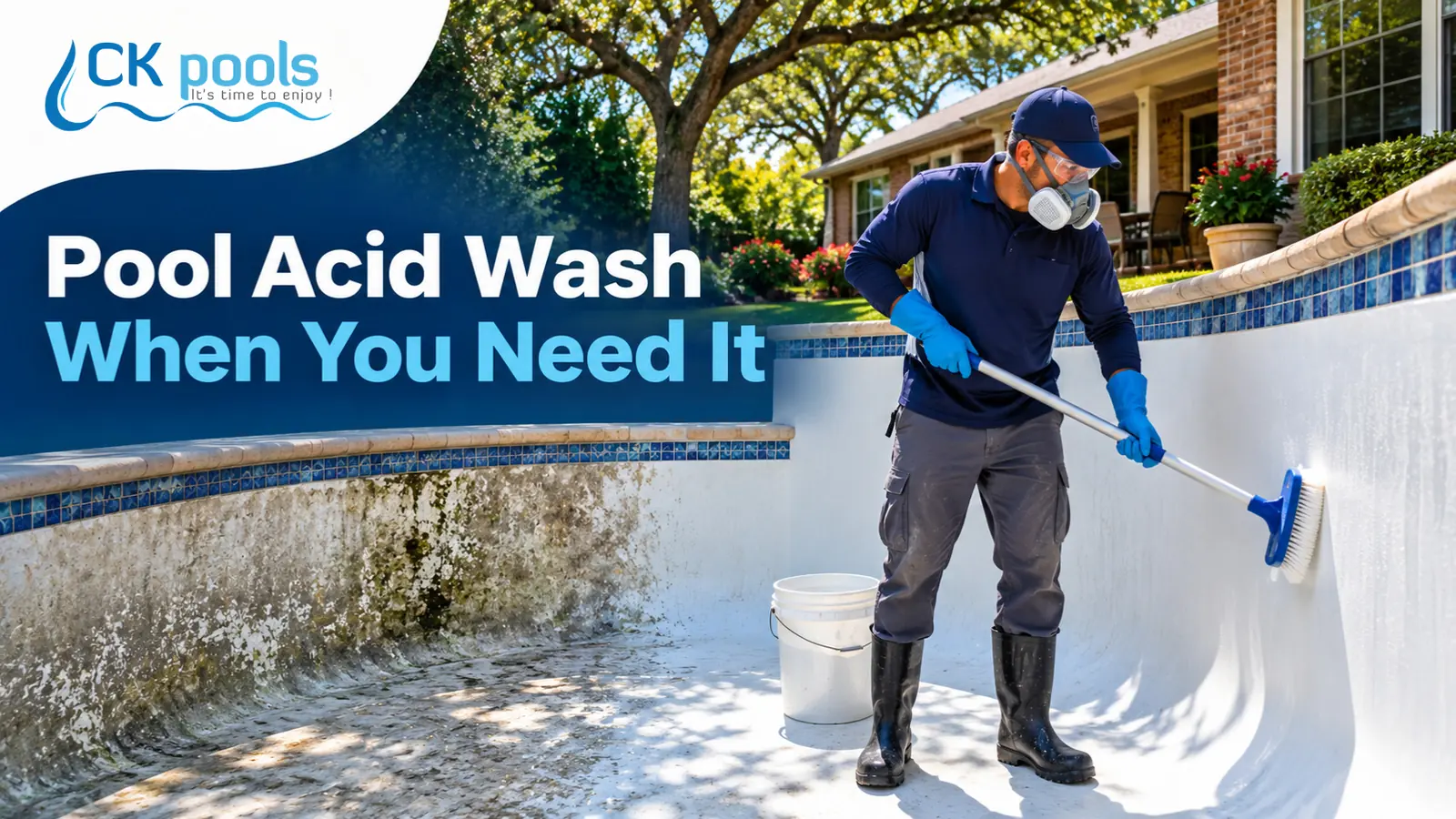
Stains that will not brush off. Black algae spots that come back every few weeks. A gray crust of scale along the walls. When regular cleaning stops working on a plaster pool, an acid wash is often the next step. A pool acid wash drains the pool and uses diluted muriatic acid to strip a very thin layer of plaster, exposing fresh, clean surface underneath. Done right, it can make a tired pool look years younger. Done too often or on the wrong finish, it shortens the life of your plaster.
Key Takeaway: An acid wash removes stubborn stains, black algae and calcium scale from plaster pools by stripping a thin surface layer. It works well every 5–7 years at most. It is not safe for vinyl or fiberglass, can etch some pebble and colored finishes, and is a poor choice if the plaster is already thin or rough.
This guide covers when an acid wash makes sense in Texas, what the process looks like, what drives the cost, and the alternatives our technicians try first.
What Is a Pool Acid Wash?
An acid wash is a deep cleaning method for plaster (marcite) pools. After the pool is drained, a technician applies a diluted solution of muriatic acid to the walls and floor in sections. The acid dissolves a very thin top layer of plaster along with the stains, algae and scale sitting in it. Each section is scrubbed and rinsed quickly so the acid only takes what it needs.
Think of it like sanding a wood deck. It reveals a fresh surface, but every time you do it, there is a little less material left.
When Does a Texas Pool Need an Acid Wash?
Black algae that keeps coming back
Black algae roots into plaster. Shock and brushing can knock it back, but the roots often survive. An acid wash removes the surface layer the roots live in.
Heavy mineral and metal stains
Brown, rust-colored or blue-green stains often come from metals in fill water, corroding equipment, or copper-based algaecides. When stain treatments do not lift them, an acid wash often will.
Calcium scale from hard water
Austin and San Antonio draw water from limestone aquifers, so it is very high in calcium. As water evaporates in the Texas heat, calcium builds up on plaster. Light scale responds to chemistry changes. Heavy, rough scale often needs an acid wash.
After a pool sat green for weeks
Swamp-green pools, often found in vacant homes or foreclosures, can leave plaster dull and blotchy. A drain and acid wash is often the fastest way to restore the surface.
Before selling a home
A clean, bright pool makes a strong first impression. If the plaster is in good structural shape, an acid wash can be a lower-cost alternative to resurfacing before listing.
When an Acid Wash Is the Wrong Choice
- Vinyl liner pools: acid damages vinyl. Never acid wash a liner.
- Fiberglass pools: acid can damage the gelcoat.
- Pebble and some quartz finishes: acid can etch, fade or loosen aggregate. These finishes usually need gentler cleaning methods.
- Thin or worn plaster: if the plaster is already rough, flaking or showing gray gunite, an acid wash can make it worse. That pool needs resurfacing, not stripping.
- Recent acid washes: if the pool was acid washed in the last few years, another wash removes more plaster than most surfaces can spare.
How the Acid Wash Process Works
- Inspection. A technician checks the finish type, plaster thickness and stain type. Some stains are better handled with targeted treatments.
- Draining. The pool is pumped out, following local rules about where pool water can be discharged.
- Pre-rinse. Walls and floor are wet down so the acid spreads evenly.
- Acid application. Diluted acid is applied in sections from top to bottom.
- Scrubbing. Each section is brushed to lift stains and scale.
- Quick rinse. Acid is rinsed off before it eats too deep.
- Neutralizing. The acid water collected at the bottom is neutralized with soda ash before it is pumped out.
- Final rinse and refill. The pool is rinsed again and refilled.
- Startup. The new water is balanced from scratch.
Draining a pool in Texas: a word of caution
Draining any in-ground pool carries risk. In areas with high groundwater, an empty pool can shift or "float." This is a real concern in parts of the Houston area and along the coast after heavy rain. Hydrostatic relief valves help, but draining should be timed and handled by someone who has done it many times.
What Affects the Cost of an Acid Wash?
We do not publish a single flat price because pools vary too much. These factors drive the total:
- Pool size and depth
- Severity of stains or scale
- Extra treatments such as a chlorine wash for algae or a stain treatment
- Water cost for refilling
- Startup chemicals to balance the new water
- Tile cleaning at the waterline, often done at the same time
An on-site look matters. If the plaster is too thin, spending money on an acid wash only delays a resurfacing project you will need anyway.
Alternatives to Try Before an Acid Wash
Targeted stain treatments
Ascorbic acid (vitamin C) based products can lift many metal stains without draining. A metal sequestrant then helps keep them from coming back.
Spot treating black algae
Brush black algae spots hard with a stainless steel brush (on plaster only), then hold a chlorine tablet directly on the spot or apply a targeted algaecide. Repeat for several days.
Controlling calcium
Keep pH at 7.4–7.6, keep alkalinity in range, and use a scale inhibitor. See our guide to lowering calcium hardness in Texas.
Professional tile and calcium cleaning
Much of the scale people notice is at the waterline tile. Bead blasting can remove it without draining the pool. Learn more in pool tile cleaning and calcium removal.
Acid Wash vs. Resurfacing
- Acid wash: lower cost, quick turnaround, removes surface stains and scale. Best for plaster that is still smooth and thick enough.
- Resurfacing: higher cost, new finish, lasts many years. Best for plaster that is rough, cracked, delaminating or thin.
If your pool is due for resurfacing within a few years anyway, putting money toward the new finish is usually smarter.
How to Keep Your Pool Clean After an Acid Wash
- Balance water weekly and test calcium monthly.
- Brush walls and floor every week.
- Keep chlorine steady so algae never gets a foothold.
- Use a metal sequestrant if your fill water has iron or copper.
- Clean your filter on schedule so it can catch fine debris.
A weekly pool maintenance service with photo reports makes this easy to track.
What Your Pool Looks Like After an Acid Wash
Right after the wash, the plaster looks brighter and more even. White plaster often looks close to new. Colored plaster may look slightly lighter because the top layer carried some of the color. The surface can feel a little rougher for the first few weeks until the water chemistry settles. Brushing daily for the first week helps smooth it and removes loose plaster dust.
Expect to see a small amount of fine dust in the filter during the first days after refilling. Clean the filter once pressure rises. Keep pH and alkalinity in range from day one, because fresh plaster is sensitive to aggressive water.
How CK Pools Decides If an Acid Wash Is Right
Before we recommend an acid wash, our technicians check plaster thickness, look for hollow spots by tapping the surface, identify the stain type, and review the water history in your service reports. If the plaster has little life left, we will tell you, and we will explain the resurfacing option instead. We never start extra work without your approval.
Why Texas Homeowners Choose CK Pools
CK Pools is a family-owned Texas pool company with 37+ years of hands-on experience and more than 4,000 completed projects. Our crews work routes in Houston, Spring, Dallas-Fort Worth, Austin, San Antonio, Baytown and Corpus Christi, so we know how coastal humidity, hard water, heavy tree cover and clay soil each affect a pool.
- Green-Free Guarantee: if your pool turns green while under our weekly care, we fix it at no extra cost.
- Digital service reports: photos and chemical readings after every visit, so you always know what was done.
- No surprise charges: we never make a repair without your approval.
- Real people on the phone: call us directly at (281) 257-6657. No outsourced call center.
Ready to hand it off? Request a free pool service quote or compare our Full and Partial Pool Service Plans.
Frequently Asked Questions
Is an acid wash bad for my pool?
Not when done correctly and rarely. Each wash removes a thin layer of plaster, so frequent acid washing shortens the life of the surface.
How long does an acid wash take?
Most residential pools take one to two days, including draining, washing and starting the refill.
Can I acid wash my pool myself?
It is possible, but muriatic acid is dangerous to skin, eyes and lungs, and mistakes can permanently damage plaster. Most homeowners hire a professional.
How often can a pool be acid washed?
For most plaster pools, no more than once every 5 to 7 years, depending on plaster thickness.
Will an acid wash remove all stains?
It removes most surface stains and scale. Deep stains in the plaster, or stains caused by failing plaster, may need resurfacing.
Sources
About the Author
Written by the CK Pools Service Team
CK Pools is a family-owned Texas pool company with 37+ years of hands-on experience and more than 4,000 completed projects across Houston, Spring, Dallas-Fort Worth, Austin, San Antonio, Baytown and Corpus Christi. Our technicians test, clean and repair pools every week, and every article is reviewed by our field team. Questions? Call (281) 257-6657.

An acid wash strips a thin layer of plaster to remove stubborn stains, algae and scale. It helps when brushing and chemicals fail, but should not be done often.


