


Pool Tile Cleaning: How to Remove Calcium Buildup in Texas
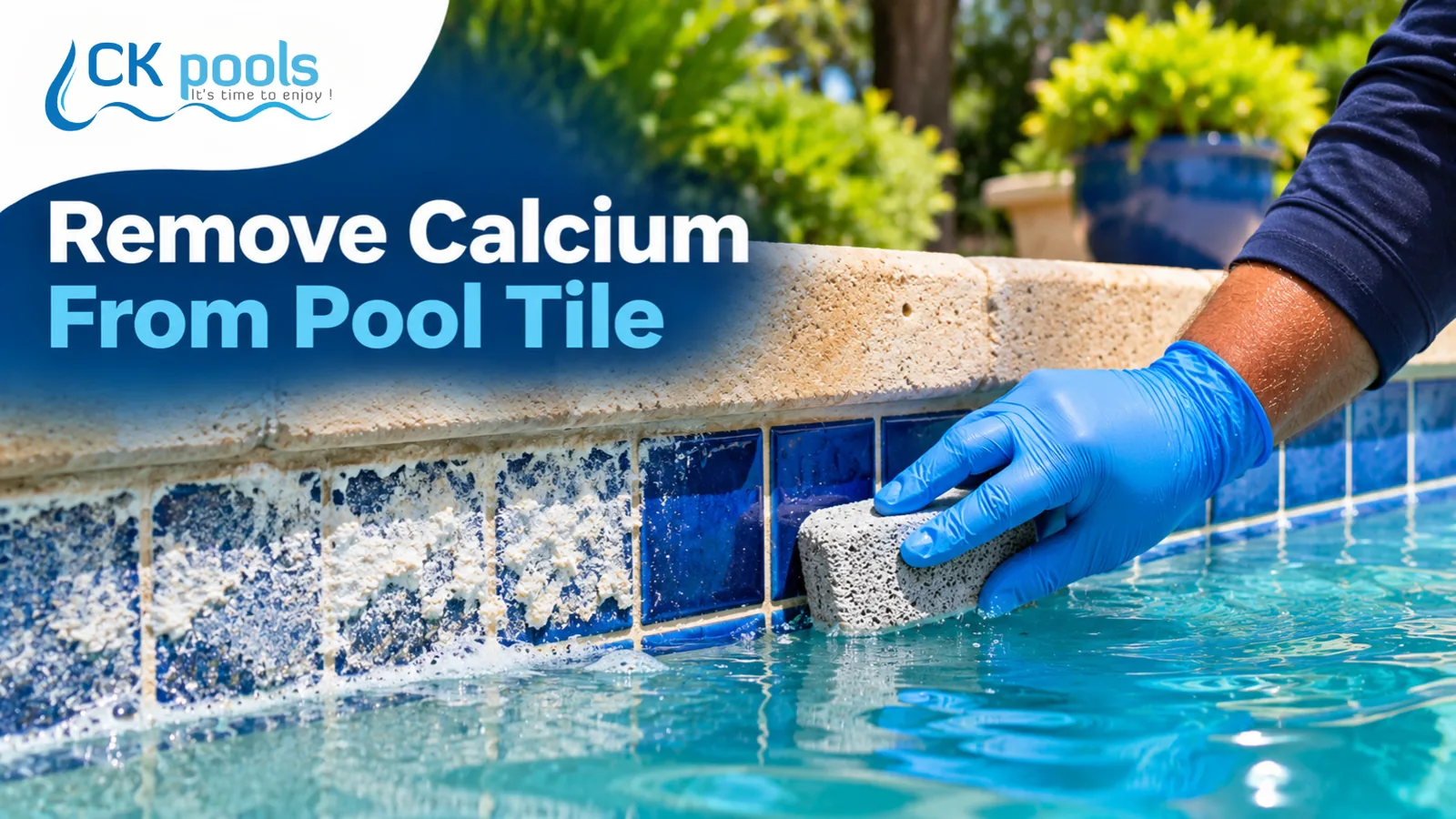
Run your hand along the waterline of many Texas pools and you will feel it: a rough, white or gray crust on the tile. That crust is calcium, and it is one of the most common complaints we hear from homeowners in Austin, San Antonio and across the state.
Key Takeaway: The white crust on pool tile is calcium scale from hard water and evaporation. Light, flaky calcium carbonate comes off with a pool pumice stone or tile cleaner. Hard, gray calcium silicate usually needs professional bead blasting. Keeping pH, alkalinity and calcium in range stops it from coming back.
In this guide, you will learn why Texas pools scale so fast, how to tell which type of buildup you have, how to remove it safely, when to call for bead blasting, and how to prevent it.
What Is the White Crust on My Pool Tile?
When pool water evaporates, the dissolved minerals stay behind. Calcium is the main one. The tile line is where water meets air, so it is where evaporation happens every day. Over weeks and months, calcium deposits build there layer by layer.
High pH makes the problem worse. When pH rises above about 7.8, calcium drops out of the water much more readily and sticks to tile, plaster and equipment.
Why Texas Pools Get So Much Calcium Buildup
Very hard fill water
Central Texas cities like Austin and San Antonio draw water from limestone aquifers. That water is naturally high in calcium. Many North Texas and Houston-area communities also have moderately hard water.
Long evaporation season
Texas pools can lose a quarter inch or more of water every summer day. Each top-off adds more calcium while the old calcium stays.
Warm water
Calcium becomes less soluble as water warms. That is the opposite of most minerals, and it means hot summer water drops calcium more readily.
Saltwater systems
Salt pools often run at a higher pH, which speeds up scale on tile and the salt cell.
The Two Types of Pool Tile Scale
Calcium carbonate
- White and chalky or flaky
- Fizzes if you drip a little diluted acid on it
- Forms relatively fast
- Easier to remove
Calcium silicate
- Gray-white and very hard, almost like stone
- Does not fizz with acid
- Builds slowly over years
- Usually needs professional removal
Not sure which you have? Put on gloves, drip a small amount of diluted acid on the deposit, and watch. Fizzing points to carbonate. No reaction points to silicate.
How to Remove Light Calcium Deposits Yourself
- Check your tile type. Glazed ceramic and porcelain handle gentle scrubbing. Glass tile scratches easily and needs gentler tools.
- Lower the water level a few inches below the scale line if the deposit sits at the waterline.
- Try a tile and scale cleaner made for pools. Apply, let it sit as directed, and scrub with a nylon brush.
- Use a pool pumice stone on glazed tile for stubborn spots. Keep the stone and tile wet. Use light pressure.
- Never use pumice on glass tile or on colored glazes that scratch.
- Rinse well and refill to normal level.
- Rebalance the water, paying close attention to pH and calcium.
This works well for thin carbonate scale. For thick buildup along a large pool, it is slow, hard work.
Professional Bead Blasting
For heavy carbonate scale or any calcium silicate, pros use low-pressure media blasting. Common media include glass beads and sodium bicarbonate. The media knocks scale off without scratching most tile when the right pressure and nozzle are used.
What to expect
- The water level is lowered below the tile line, usually not fully drained
- Plastic sheeting protects nearby surfaces
- The tech works around the pool section by section
- Media is cleaned up from the pool and deck
- Water is refilled and balanced
Most residential pools take a few hours to a day depending on size and buildup.
Is bead blasting safe for my tile?
For most glazed ceramic, porcelain and natural stone tile, yes, when done by an experienced technician. Some delicate glass or specialty glazes need a softer media or a hand-cleaning approach. A good technician tests a small area first.
How to Prevent Calcium Buildup
Keep pH at 7.4–7.6
This is the single biggest factor. Test weekly and adjust with acid as needed.
Keep total alkalinity in range
Usually 80–120 ppm. High alkalinity pushes pH up.
Test calcium hardness monthly
Aim for about 200–400 ppm for plaster pools. When calcium gets very high, partial draining and refilling is the main fix. Learn more in how to lower pool calcium hardness.
Use a scale inhibitor
Sequestering agents help keep calcium in solution. They are especially useful in Austin and San Antonio.
Brush the tile line weekly
Fresh deposits come off easily. Old deposits do not.
Reduce evaporation
A cover cuts evaporation sharply, which means fewer top-offs and less calcium added. See pool evaporation in Texas.
Calcium on Tile vs. Other Waterline Stains
- Gray or black ring: often body oils, sunscreen and dirt. Use an enzyme or tile cleaner.
- Green or blue stains: may be copper from equipment or algaecides.
- Brown or rust stains: often iron from fill water.
- White crust: calcium.
Treating the right problem saves time and money. Our technicians note waterline conditions in every service report, so you can see changes before they become hard to remove.
When Tile Is Too Damaged to Clean
Sometimes scale hides cracked, loose or missing tile. If tiles are popping off or grout is failing, cleaning will not fix the problem. Read pool tile repair: common problems and costs, and if you are planning bigger upgrades, how to choose pool tile in Texas.
Calcium and Your Equipment
Tile is where you see scale, but it is not the only place it forms. The same calcium coats heater heat exchangers, salt cell plates, and the inside of pipes. Scaled heater tubes heat poorly and can overheat. A scaled salt cell makes less chlorine. Keeping calcium and pH under control protects much more than the look of your waterline. See how to clean a salt cell and common pool heater problems.
Hard Water by Region: What We See on Our Routes
- Austin and San Antonio: the hardest water we service. Scale shows up fastest and calcium silicate is common on older pools.
- Dallas-Fort Worth: moderately hard water plus long, hot summers. Waterline scale is common by late summer.
- Houston, Spring and Baytown: frequent rain dilutes calcium, but humidity and heavy use keep pH drifting. Body oil rings are as common as scale.
- Corpus Christi: salt air, heat and evaporation combine, so waterline buildup and equipment corrosion both need attention.
Tile Cleaning Cost Factors
- Length of the tile line
- Type and thickness of scale
- Tile material (glass needs more care)
- Whether a spa or water features are included
- Whether the water needs to be lowered and rebalanced
We give a clear quote after seeing the pool, and nothing is added without your approval.
Quick Weekly Tile Care Routine
- Brush the full tile line with a nylon brush
- Wipe any oily ring with a tile cleaner
- Test pH and adjust to 7.4–7.6
- Check the water level and top off only as needed
- Note any new white spots so they can be treated while they are still soft
Five minutes a week keeps most Texas pools from needing a deep tile cleaning for a long time.
Why Texas Homeowners Choose CK Pools
CK Pools is a family-owned Texas pool company with 37+ years of hands-on experience and more than 4,000 completed projects. Our crews work routes in Houston, Spring, Dallas-Fort Worth, Austin, San Antonio, Baytown and Corpus Christi, so we know how coastal humidity, hard water, heavy tree cover and clay soil each affect a pool.
- Green-Free Guarantee: if your pool turns green while under our weekly care, we fix it at no extra cost.
- Digital service reports: photos and chemical readings after every visit, so you always know what was done.
- No surprise charges: we never make a repair without your approval.
- Real people on the phone: call us directly at (281) 257-6657. No outsourced call center.
Ready to hand it off? Request a free pool service quote or compare our Full and Partial Pool Service Plans.
Frequently Asked Questions
Can I use vinegar to clean pool tile?
Vinegar can soften light calcium carbonate, but it is slow and weak on Texas scale. A pool tile cleaner works better.
Will bead blasting damage my tile?
When done by an experienced tech with the right media and pressure, it is safe for most glazed and stone tile.
How often should pool tile be cleaned?
Brush weekly. Most Texas pools benefit from a deep tile cleaning every 1 to 2 years.
Do I need to drain my pool for tile cleaning?
Usually not. The water is lowered below the tile line.
Why does calcium come back so fast?
High pH, hard fill water and heavy evaporation. Fixing water balance slows it down a lot.
Sources
About the Author
Written by the CK Pools Service Team
CK Pools is a family-owned Texas pool company with 37+ years of hands-on experience and more than 4,000 completed projects across Houston, Spring, Dallas-Fort Worth, Austin, San Antonio, Baytown and Corpus Christi. Our technicians test, clean and repair pools every week, and every article is reviewed by our field team. Questions? Call (281) 257-6657.

White crust at the waterline is usually calcium carbonate or calcium silicate from hard Texas water. Here is how to remove it and keep it from coming back.


