


How Much Does Pool Leak Detection Cost?
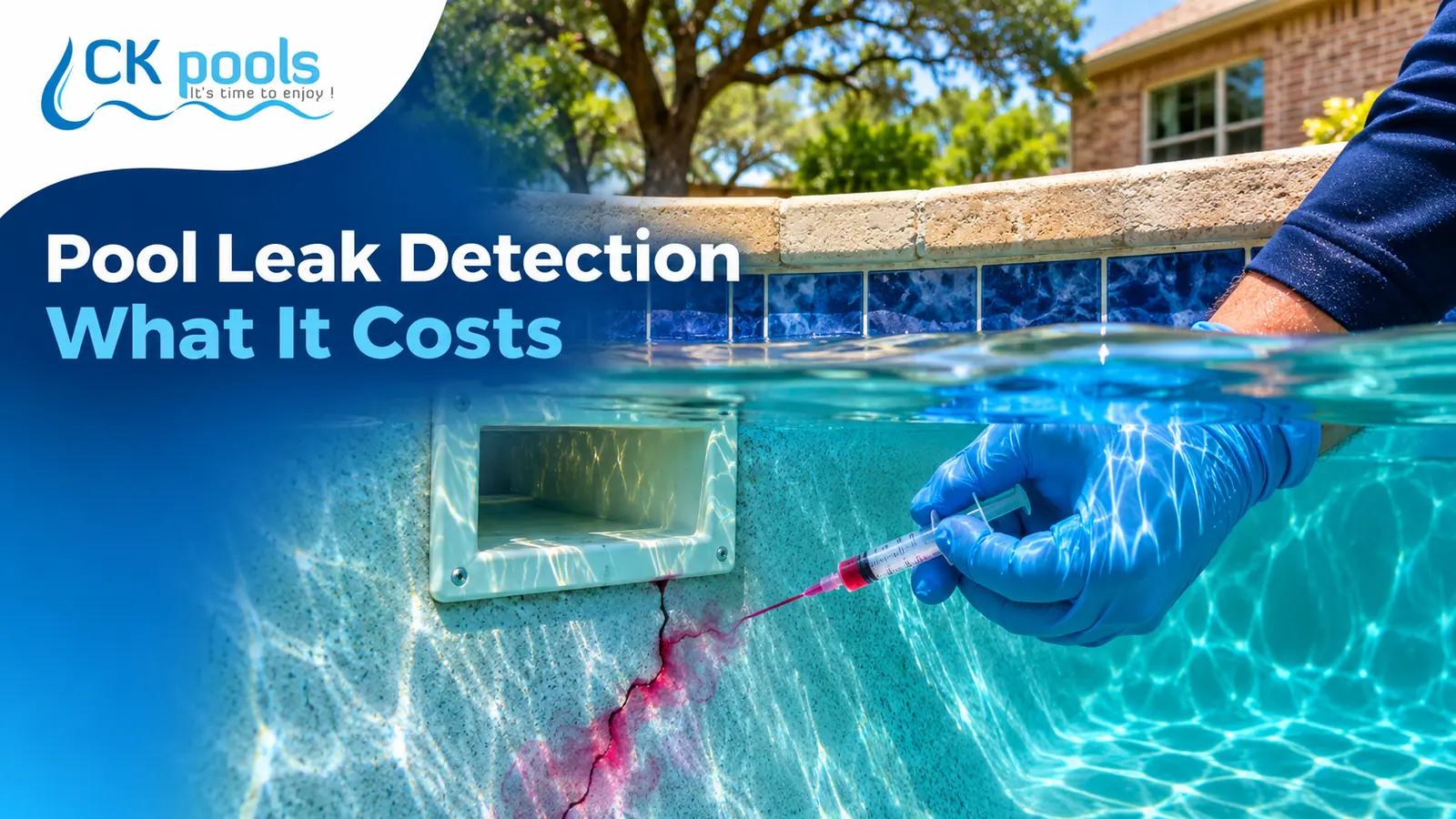
Topping off your pool every few days? Seeing wet spots in the yard? Your water bill creeping up? You might have a leak. The good news: most pool leaks can be found and fixed without draining the pool. The question most owners ask first is what leak detection costs and what they get for it.
Key Takeaway: Professional pool leak detection is usually a flat-fee visit that includes pressure-testing plumbing lines, dye-testing the shell, lights and fittings, and electronic listening for underground leaks. Repair is priced separately once the leak is found. Finding a leak early almost always costs less than ignoring it.
This guide explains how to tell evaporation from a leak, what happens during a leak detection visit, what drives cost, the most common leaks in Texas pools, and what happens if you wait.
Is It a Leak or Just Evaporation?
Texas pools lose a lot of water to evaporation. On hot, dry, windy summer days, a quarter inch or more per day is normal. That adds up fast, so many owners assume they have a leak when they do not.
The bucket test
- Fill a bucket with pool water and set it on the first or second pool step, so the bucket water level matches the pool.
- Mark the water level inside the bucket and on the outside of the bucket at the pool level.
- Turn off auto-fill if you have one.
- Run the pump as normal for 24 hours.
- Compare. If the pool drops noticeably more than the bucket, you likely have a leak.
- Repeat with the pump off. If the pool loses more with the pump running, the leak is likely on the pressure side of the plumbing. If it loses more with the pump off, it may be on the suction side or the shell.
Learn more in pool evaporation vs. a leak in Texas.
Signs You Have a Pool Leak
- Losing more than a quarter inch a day consistently
- Wet or soggy areas in the yard near the pool or equipment
- Cracks in the deck or shell
- Loose or falling tiles
- Air in the pump basket or bubbles from return jets
- Algae that keeps coming back despite good chemistry
- A higher water bill
- Auto-fill running constantly
What Happens During a Leak Detection Visit
Visual inspection
The technician checks the shell, tile line, skimmers, returns, lights, drains, steps and the equipment pad for obvious problems.
Dye testing
With the pump off, a small amount of dye is released near suspected leak points. If there is a leak, the dye is pulled toward it. This works well around light niches, skimmer throats, returns and cracks.
Pressure testing
Each plumbing line is isolated and pressurized. If a line cannot hold pressure, it has a leak.
Electronic listening
Sensitive listening equipment helps pinpoint where water escapes from an underground pipe, so repairs dig in the right place.
Report
You get a clear report of what was found, where, and what the repair options are.
Most residential visits take about 2 to 4 hours.
What Affects Leak Detection Cost?
- Pool size and complexity
- Number of plumbing lines such as skimmers, drains, returns, cleaner lines and spa lines
- Attached spa or water features
- Access to equipment and plumbing
- Whether repairs are done the same visit
Most companies charge leak detection as its own service, then quote the repair. Some credit part of the detection fee toward the repair.
Most Common Leaks in Texas Pools
Skimmer throat cracks
The joint where the skimmer meets the pool shell is one of the most common leak points in Texas. Soil movement, especially in clay soils around Dallas and parts of Houston, stresses this joint.
Light niche leaks
Water can escape around the light niche or through the conduit that carries the light cord.
Underground plumbing
Pipes can crack from soil movement, tree roots, freezes or age.
Equipment pad leaks
Pumps, filters, valves and heaters can leak at seals, unions and o-rings.
Shell cracks
Structural or surface cracks in plaster and gunite.
Main drain and return fittings
Fittings can loosen or crack over time.
Common Repair Types
- Underwater putty or epoxy for small cracks and fittings
- Skimmer repair or replacement
- Light niche sealing or conduit plugging
- Underground pipe repair, digging only where the leak is located
- Equipment seal and o-ring replacement
- Crack repair and resurfacing for larger shell problems
The Cost of Waiting
- Soil erosion: leaking water can wash out soil under the deck or pool, causing settling and cracks.
- Higher bills: for water and for chemicals, since you keep adding fresh water.
- Chemistry problems: constant top-offs throw off pH, alkalinity and calcium, and in hard-water areas add more scale.
- Equipment damage: air leaks can make pumps run dry.
- Bigger repairs later: small leaks rarely fix themselves.
Read signs your pool is losing water and how to find a pool leak.
Can You Find a Leak Yourself?
You can do the bucket test, check for wet spots, look for cracks, and use a few drops of food coloring near suspected spots with the pump off. That catches some obvious leaks. Hidden plumbing leaks almost always need professional pressure testing and listening equipment.
Leak Detection Before Resurfacing
If you are planning to resurface, test for leaks first. It makes little sense to put a new finish on a pool that is losing water through its plumbing.
How CK Pools Handles Leak Detection
We start with a full inspection and testing, explain what we find in plain language, and give you repair options with clear pricing before any work starts. No unauthorized repairs and no surprise charges. Learn more about our pool leak detection service.
How Leaks Affect Water Chemistry
A leaking pool is constantly diluted with fresh tap water. In Austin and San Antonio, that water is very hard, so calcium keeps climbing and scale forms faster. In every city, fresh water lowers stabilizer and changes pH and alkalinity, which means more chemicals and more time balancing. Many owners first notice a leak not by the water level but by chemistry that will not stay balanced.
Leak Detection After a Freeze
Hard freezes can crack pipes, valves, pump housings and filter tanks, especially when power goes out and water stops moving. If your pool started losing water after a freeze, check the equipment pad first for visible cracks and drips, then schedule pressure testing for underground lines.
What to Do Before the Technician Arrives
- Keep the pool filled to normal level if you can
- Note how much water you lose per day and whether the pump was on
- Write down when the loss started and any recent events (storms, freezes, construction)
- Clear access to the equipment pad and any wet spots in the yard
- Turn off auto-fill a day before if possible
This information helps the technician narrow down the leak faster.
Leak Repair vs. Resurfacing
If a leak comes from widespread cracking or failing plaster, patching may only buy time. In those cases, the right fix is crack repair plus resurfacing. Read pool resurfacing cost in Dallas-Fort Worth. If the leak is a single fitting or a skimmer joint, a targeted repair is usually all you need.
Auto-Fill Valves Can Hide Leaks
An auto-fill keeps the water level steady, which is convenient but can mask a leak for months. Check your water bill for jumps, listen for the fill valve running often, and turn it off for a day now and then to see how much water you really lose.
Why Texas Homeowners Choose CK Pools
CK Pools is a family-owned Texas pool company with 37+ years of hands-on experience and more than 4,000 completed projects. Our crews work routes in Houston, Spring, Dallas-Fort Worth, Austin, San Antonio, Baytown and Corpus Christi, so we know how coastal humidity, hard water, heavy tree cover and clay soil each affect a pool.
- Green-Free Guarantee: if your pool turns green while under our weekly care, we fix it at no extra cost.
- Digital service reports: photos and chemical readings after every visit, so you always know what was done.
- No surprise charges: we never make a repair without your approval.
- Real people on the phone: call us directly at (281) 257-6657. No outsourced call center.
Ready to hand it off? Request a free pool service quote or compare our Full and Partial Pool Service Plans.
Frequently Asked Questions
How long does pool leak detection take?
Most residential visits take 2 to 4 hours.
Does homeowners insurance cover pool leaks?
Sometimes for sudden damage, rarely for wear and tear. Check your policy and talk to your agent.
Can you find a leak without draining the pool?
Yes. Most leak detection is done with the pool full.
How much water loss is normal in Texas?
In summer, a quarter inch per day or a bit more from evaporation is common. Consistently more than that suggests a leak.
Should I fix a small leak right away?
Yes. Small leaks often grow and can damage soil, decks and equipment.
Sources
About the Author
Written by the CK Pools Service Team
CK Pools is a family-owned Texas pool company with 37+ years of hands-on experience and more than 4,000 completed projects across Houston, Spring, Dallas-Fort Worth, Austin, San Antonio, Baytown and Corpus Christi. Our technicians test, clean and repair pools every week, and every article is reviewed by our field team. Questions? Call (281) 257-6657.

Professional leak detection is usually a flat-fee service that pressure-tests plumbing and dye-tests the shell. Repair is priced separately based on what is found.


