


How Much Does Pool Resurfacing Cost in Dallas-Fort Worth?
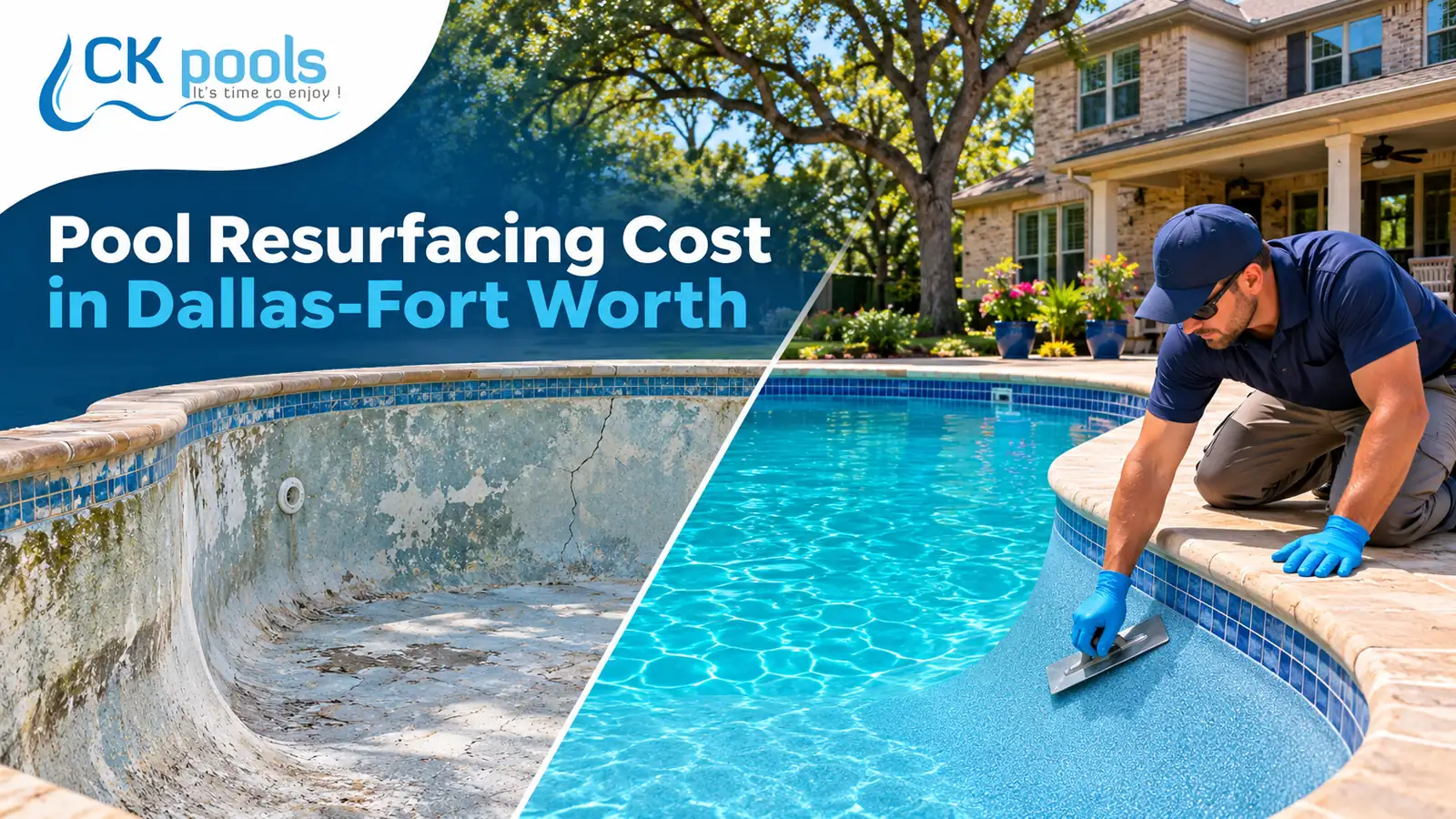
If your plaster feels rough on your feet, stains will not come out, or the pool keeps losing water, it may be time to resurface. In Dallas-Fort Worth, resurfacing is one of the most common pool projects we quote, and the first question is always about cost.
Key Takeaway: Pool resurfacing in Dallas-Fort Worth is priced mainly by pool size and finish type. White plaster is the lowest-cost option, quartz finishes cost more, and pebble finishes cost the most but last the longest. Tile, coping and crack repairs add to the total. A free on-site estimate is the only way to get an exact number for your pool.
This guide explains what drives resurfacing cost in DFW, how plaster, quartz and pebble compare, why North Texas pools wear out the way they do, and what to expect during the project.
What Is Pool Resurfacing?
Resurfacing replaces the interior finish of a concrete (gunite or shotcrete) pool. The finish is the waterproof layer you see and touch. Over time, chemistry, sun and wear break it down. Resurfacing removes or prepares the old surface and applies a new one. The concrete shell underneath stays the same.
What Affects Resurfacing Cost in DFW?
Pool size and shape
More square footage means more material and more labor. Free-form pools with lots of curves, benches and steps take more time than simple rectangles.
Finish type
The finish you choose is one of the biggest cost factors. More on that below.
Surface preparation
Some pools can be resurfaced over the old finish after a bond coat. Others need the old plaster chipped out completely. Chipping out takes more time and labor.
Repairs
North Texas clay soil moves. Cracks, delamination (hollow spots), and damaged fittings need repair before new finish goes on.
Tile and coping
Many owners replace waterline tile and coping during resurfacing, since the pool is already drained.
Add-ons
New lights, updated returns, a spa refinish, or water features all add to the total.
Access
Tight backyard access can slow down equipment and material delivery.
Plaster vs. Quartz vs. Pebble
White plaster
- Classic, bright, smooth look
- Lowest upfront cost
- Shows stains and scale sooner
- Often lasts about 7–10 years with good care
Quartz
- Plaster blended with quartz aggregate
- Wide range of colors
- More stain and chemical resistant than plain plaster
- Often lasts about 10–15 years
Pebble
- Small smooth stones bonded in cement
- Textured feel and natural look
- Most durable and hides minor stains
- Highest upfront cost
- Often lasts 15–20+ years
For many DFW homeowners, quartz hits the best balance of cost and durability. If you plan to stay in your home a long time, pebble often costs less per year of use.
Why DFW Pools Wear Out Faster
Expansive clay soil
Much of the Dallas-Fort Worth area sits on clay that swells when wet and shrinks during drought. That movement stresses pool shells, coping and decks, and it can crack plaster.
Heat and sun
Long, hot summers raise water temperature and speed up chemical reactions that wear finishes.
Freezes
Hard freezes can damage tile, coping and plaster at the waterline, especially if water gets into cracks.
Hard water
Moderately hard water leaves scale on plaster and tile over time.
Chemistry swings
Pools that run with low pH for long periods get etched, rough plaster. Pools with high pH get scale.
Signs It Is Time to Resurface
- Rough plaster that scratches feet or snags swimsuits
- Stains that do not respond to treatments or an acid wash
- Cracks, chips or exposed gunite
- Hollow-sounding spots when tapped (delamination)
- Water loss with no plumbing leak found
- Faded, blotchy or mottled color
Read more in signs your pool needs resurfacing.
What to Expect During a Resurfacing Project
- Inspection and quote. We check the shell, finish, tile, coping and equipment, then give a written quote.
- Draining. The pool is drained carefully, with attention to groundwater and weather.
- Prep. Old plaster is chipped out or prepared with a bond coat. Repairs are made.
- Tile and coping work if included.
- Finish application. The new finish is applied, usually in one day for the main pool.
- Refill. The pool is refilled without stopping, to avoid lines in the finish.
- Startup. The water is balanced carefully over the first weeks. This step matters a lot for how the finish looks and lasts.
Most projects take about 1 to 2 weeks, depending on weather, repairs and finish type.
Best Time to Resurface in DFW
Spring and fall are ideal. Mild temperatures help finishes cure evenly. Extreme summer heat can make finishes cure too fast, and freezes can damage fresh finishes. Booking early in the season helps you get on the schedule before summer demand.
How to Make a New Finish Last
- Keep pH at 7.2–7.6 and alkalinity in range
- Test calcium monthly and manage hard water
- Brush weekly, especially in the first month
- Never let the pool sit green
- Avoid dumping undissolved chemicals onto the surface
Our weekly pool maintenance service includes photo reports and chemical readings after every visit, which helps protect your investment.
Resurfacing vs. Remodeling
Resurfacing renews the interior. A full remodel can also change tile, coping, decking, lighting, equipment and shape. If your pool also needs new equipment or a deck update, doing it all at once often saves money. See 2026 pool remodeling trends in Texas and renovation vs. replacement.
How to Compare Resurfacing Quotes
Quotes can look very different for the same pool. When you compare, check:
- Prep method: full chip-out or bond coat over old plaster?
- Finish brand and type: plaster, quartz or pebble, and which product line?
- Repairs included: are cracks, fittings and tile repairs listed or extra?
- Tile and coping: included, optional or not mentioned?
- Startup service: who balances the water for the first weeks, and is it included?
- Warranty: what does it cover, for how long, and what voids it?
- Timeline: start date, drain date and refill date.
The lowest quote often skips prep or startup. Those are the steps that decide how long your finish lasts.
Mistakes That Shorten a New Finish
- Letting pH run high, which causes scale on fresh plaster
- Letting pH run low, which etches the surface
- Skipping daily brushing during the first weeks
- Adding undissolved chemicals that settle on the floor
- Letting leaves sit and stain the new surface
- Not fixing leaks first, then adding hard water week after week
Pool Resurfacing and Home Value
A fresh interior makes a strong impression on buyers and appraisers, and it removes an obvious repair item from an inspection report. If you plan to sell in the next few years, resurfacing with a durable finish can help the home show well and avoid repair credits at closing.
Neighborhood Notes From Our DFW Routes
In older neighborhoods with mature trees, leaves and tannins stain finishes faster, so we often recommend quartz or pebble in darker shades. In newer subdivisions on expansive clay, we pay close attention to skimmer joints and coping, since soil movement shows up there first.
Resurfacing and Your Equipment
While the pool is empty, it is a good time to check equipment. A failing pump or heater is easier to replace now, and new equipment can protect the new finish. Many owners upgrade to a variable-speed pump during resurfacing. See pool pump motor replacement cost and heat pump vs. gas pool heater.
Why Texas Homeowners Choose CK Pools
CK Pools is a family-owned Texas pool company with 37+ years of hands-on experience and more than 4,000 completed projects. Our crews work routes in Houston, Spring, Dallas-Fort Worth, Austin, San Antonio, Baytown and Corpus Christi, so we know how coastal humidity, hard water, heavy tree cover and clay soil each affect a pool.
- Green-Free Guarantee: if your pool turns green while under our weekly care, we fix it at no extra cost.
- Digital service reports: photos and chemical readings after every visit, so you always know what was done.
- No surprise charges: we never make a repair without your approval.
- Real people on the phone: call us directly at (281) 257-6657. No outsourced call center.
Ready to hand it off? Request a free pool service quote or compare our Full and Partial Pool Service Plans.
Frequently Asked Questions
How long does pool resurfacing take in Dallas?
Most projects take about 1 to 2 weeks, depending on weather, repairs and finish type.
Is resurfacing worth it?
Yes, if the shell is sound. It renews the look, feel and waterproofing for far less than building a new pool.
What is the best time of year to resurface in DFW?
Spring and fall. Extreme heat and freezes make curing harder.
Can I resurface over my old plaster?
Sometimes. If the old plaster is well bonded, a bond coat may work. Delaminated plaster must be removed.
Which finish lasts longest?
Pebble finishes usually last the longest, followed by quartz, then plaster.
Does resurfacing fix leaks?
It fixes leaks through worn or cracked finish. Plumbing leaks need separate detection and repair before resurfacing.
Do I need to drain the pool for resurfacing?
Yes. The pool must be fully drained so the old surface can be prepared and the new finish applied.
Sources
About the Author
Written by the CK Pools Service Team
CK Pools is a family-owned Texas pool company with 37+ years of hands-on experience and more than 4,000 completed projects across Houston, Spring, Dallas-Fort Worth, Austin, San Antonio, Baytown and Corpus Christi. Our technicians test, clean and repair pools every week, and every article is reviewed by our field team. Questions? Call (281) 257-6657.

Pool resurfacing cost in DFW depends on pool size, finish type and repairs needed. Plaster is the lowest-cost option, quartz is mid-range, and pebble costs the most but lasts longest.


