


Pool Pump Motor Replacement Cost: Repair, Motor or New Pump?
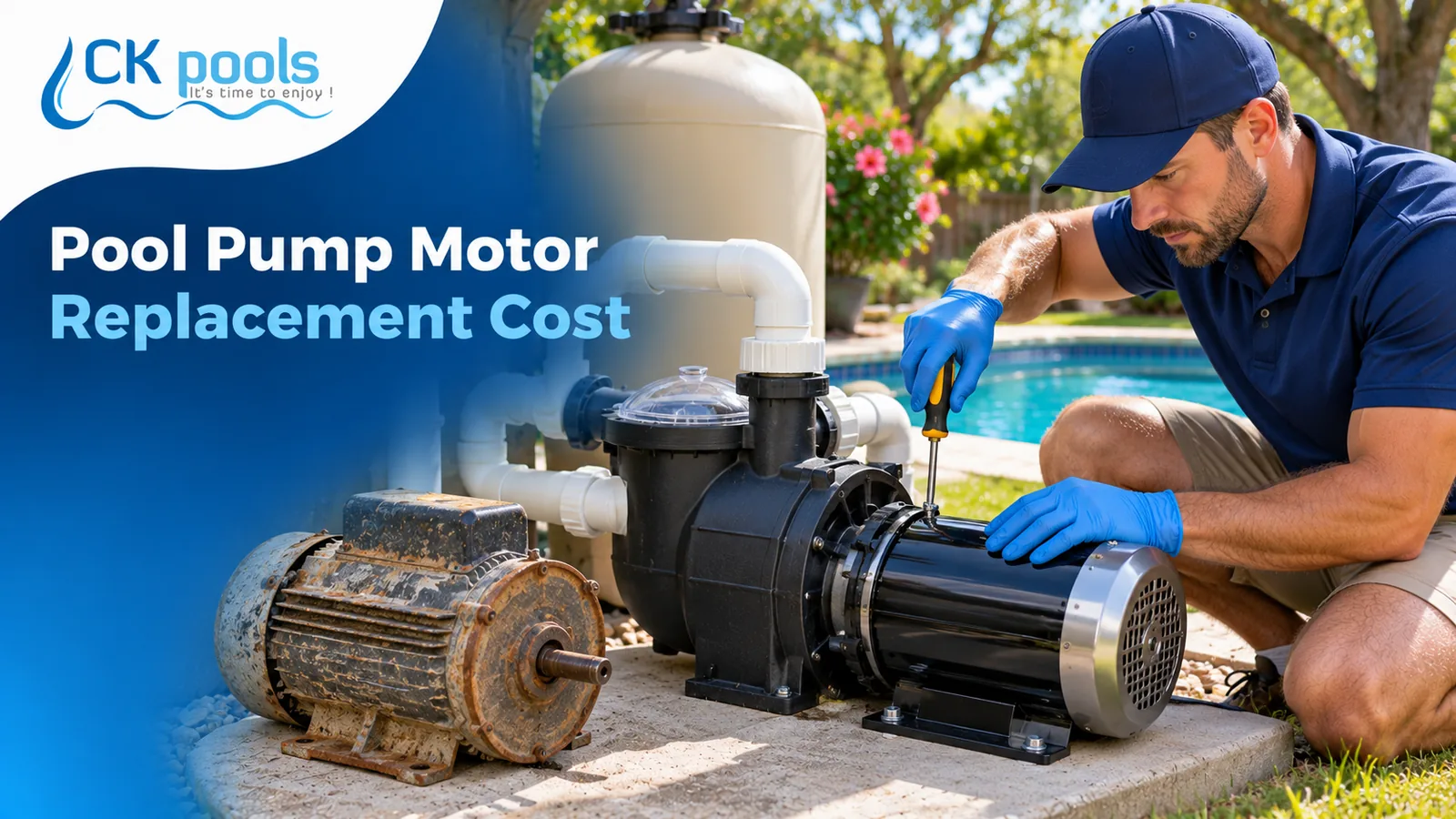
A pool pump that screeches, hums without starting, or shuts itself off is telling you something. Often it is the motor. The question is whether to repair it, replace just the motor, or replace the whole pump. The answer affects both your repair bill now and your electric bill for years.
Key Takeaway: If the pump housing is in good shape, replacing only the motor is usually the lowest-cost fix. If the pump is old, cracked or inefficient, replacing the whole pump, ideally with a variable-speed model, often saves more over time. Small fixes like a capacitor or bearings may be all you need. Cost depends on horsepower, brand and whether you upgrade.
This guide covers how a pool pump works, signs of motor failure, your repair options, what affects cost, and why many Texas homeowners upgrade to variable speed.
How a Pool Pump Works
A pool pump has two main parts:
- The wet end: the housing, strainer basket, lid and impeller. This is where water flows.
- The motor: the electric motor that spins the impeller.
A seal between them keeps water out of the motor. When that seal fails, water can reach the motor bearings and cause noise and failure.
Signs Your Pool Pump Motor Is Failing
Loud grinding or screeching
Usually worn bearings. Often caused by water leaking from a failed shaft seal.
Humming but not starting
Often a failed capacitor, a seized motor, or a jammed impeller.
Shutting off on its own
The motor may be overheating. Poor ventilation, a clogged impeller, or electrical problems can cause it.
Tripping the breaker
Can point to a short in the motor, wiring problems, or water damage.
Burning smell
Stop the pump and call a pro. This often means serious motor damage.
Leaking under the pump
Usually a shaft seal, o-ring or cracked housing.
Low flow
May be a clogged impeller, air leak, dirty filter or a weak motor.
Repair Options From Smallest to Largest
1. Capacitor replacement
When the motor hums but will not start, a failed start capacitor is a common cause. It is a small, low-cost part.
2. Clearing the impeller
Leaves, pine needles and debris can jam the impeller, especially under heavy tree cover in Spring and Dallas.
3. Shaft seal replacement
Stops leaks before water ruins the bearings. Catching it early can save the motor.
4. Bearing replacement
Fixes noise if the motor is otherwise healthy. Many technicians recommend a full motor replacement instead if the motor is older.
5. Motor replacement
A new motor on the existing wet end. A good option if the housing, lid and basket are in good shape.
6. Full pump replacement
New motor, housing, impeller and basket. Best when the housing is cracked or sun-damaged, parts are hard to find, or you want to upgrade to variable speed.
What Affects Pump Repair and Replacement Cost?
- Horsepower and brand
- Single-speed, two-speed or variable-speed
- Plumbing changes needed to fit a new pump
- Electrical work, especially for variable-speed models
- Labor and travel
- Warranty coverage
Motor Only or Whole Pump?
Replace the motor only when
- The wet end is in good shape
- The pump model is current and parts are available
- You plan to replace the whole system soon anyway
Replace the whole pump when
- The housing is cracked, warped or sun-damaged
- The pump is old and inefficient
- Parts are hard to find
- You want lower electric bills from variable speed
Why Many Texas Homeowners Upgrade to Variable Speed
Texas pools run their pumps many hours a day, most of the year. Single-speed pumps run at full power the whole time. A variable-speed pump can run at low speed for most of the day, moving enough water to filter the pool while using much less electricity.
Benefits of variable-speed pumps
- Much lower energy use
- Quieter operation
- Programmable speeds for filtering, skimming, heating and cleaning
- Less wear on filters and plumbing at lower speeds
Some Texas utilities offer rebates on variable-speed pumps. See Texas pool pump rebates and how long to run a pool pump in Texas.
How Long Do Pool Pump Motors Last?
Often around 8 to 12 years, but Texas conditions can shorten that. Heat, poor ventilation, water leaks onto the motor, and running dry all reduce life. Read how long pool pumps last in Texas.
How to Make a New Pump Last Longer
- Keep the pump basket clean so it never runs dry
- Fix seal leaks early
- Keep the motor shaded and well ventilated, but do not enclose it tightly
- Keep the area free of leaves and water splash
- Keep the filter clean to reduce strain
- Use freeze protection during hard freezes
Can I Replace a Pool Pump Motor Myself?
It involves electrical work, shaft seals and proper wiring. Mistakes can damage the new motor or create a shock risk. Most homeowners hire a professional, which also protects the manufacturer warranty in many cases.
How CK Pools Handles Pump Repairs
Our technicians check pump sound, flow and leaks during every weekly visit and log it in your digital report. When something needs repair, we explain the options, from a capacitor to a full variable-speed upgrade, and give you clear pricing before any work starts. Learn more about pool equipment repair.
Pump Problems by Region: What We See on Texas Routes
- Houston, Baytown and Corpus Christi: humidity and salt air corrode motor parts and electrical connections. Shade and airflow matter.
- Spring and Dallas: heavy leaf and pine needle debris jams impellers and fills baskets, causing pumps to run dry.
- Austin and San Antonio: heat and hard water stress seals and equipment.
- Dallas-Fort Worth: hard freezes can crack pump housings when power fails.
Questions to Ask Before Replacing a Pump
- Is the problem the motor, the wet end, or something else like a clogged impeller?
- How old is the pump, and are parts still available?
- Is the pump sized correctly for my pool and filter?
- Would a variable-speed pump work with my heater, salt cell and cleaner?
- What warranty comes with the new motor or pump?
- Is there a utility rebate available?
Single-Speed, Two-Speed and Variable-Speed Compared
- Single-speed: one fixed speed, lowest upfront cost, highest running cost.
- Two-speed: a low and a high speed. A middle ground, but less flexible.
- Variable-speed: many speeds, programmable, highest upfront cost, lowest running cost for most Texas pools.
What Happens During a Pump Replacement
- Power is shut off at the breaker.
- The old pump or motor is disconnected and removed.
- Plumbing is adjusted if the new pump has different dimensions.
- The new pump or motor is installed with new seals and o-rings.
- Wiring is connected and bonded properly.
- The pump is primed, tested for leaks and flow, and programmed.
- Timer or automation schedules are set for the season.
Most replacements take a few hours.
Signs You Waited Too Long
- The pool turned cloudy or green while the pump was down
- Water damage spread to the motor windings
- The housing cracked from running dry or freezing
Calling at the first sign of noise or leaks usually keeps the repair small.
Signs It Is Not the Motor
Sometimes the motor is fine. Low flow can come from a clogged filter, a full pump basket, a closed valve, or an air leak at the lid o-ring. A humming pump might have a jammed impeller rather than a dead motor. A good technician checks these first so you do not pay for a motor you do not need.
Why Texas Homeowners Choose CK Pools
CK Pools is a family-owned Texas pool company with 37+ years of hands-on experience and more than 4,000 completed projects. Our crews work routes in Houston, Spring, Dallas-Fort Worth, Austin, San Antonio, Baytown and Corpus Christi, so we know how coastal humidity, hard water, heavy tree cover and clay soil each affect a pool.
- Green-Free Guarantee: if your pool turns green while under our weekly care, we fix it at no extra cost.
- Digital service reports: photos and chemical readings after every visit, so you always know what was done.
- No surprise charges: we never make a repair without your approval.
- Real people on the phone: call us directly at (281) 257-6657. No outsourced call center.
Ready to hand it off? Request a free pool service quote or compare our Full and Partial Pool Service Plans.
Frequently Asked Questions
How long does a pool pump motor last?
Often 8 to 12 years, less with heat, poor ventilation or water leaks onto the motor.
Can I replace a pool pump motor myself?
It involves electrical work and seals. Most homeowners hire a pro for safety and warranty reasons.
Is it worth repairing an old single-speed pump?
Small repairs like a capacitor are worth it. For a full motor replacement, upgrading to variable speed is often smarter.
Why is my pool pump humming but not running?
Often a failed capacitor or a jammed impeller. Turn it off to avoid burning out the motor and call a technician.
Does a variable-speed pump really save money?
For most Texas pools that run many hours a day, yes. Savings depend on run time and electricity rates.
Sources
- ENERGY STAR: Pool Pumps
- U.S. Department of Energy: Choosing, Installing and Operating an Efficient Swimming Pool Pump
About the Author
Written by the CK Pools Service Team
CK Pools is a family-owned Texas pool company with 37+ years of hands-on experience and more than 4,000 completed projects across Houston, Spring, Dallas-Fort Worth, Austin, San Antonio, Baytown and Corpus Christi. Our technicians test, clean and repair pools every week, and every article is reviewed by our field team. Questions? Call (281) 257-6657.

When a pool pump motor fails, you can replace the motor, the whole pump, or upgrade to variable speed. The best choice depends on the pump age and condition.


