


Pool Light Not Working? Repair and LED Replacement Guide
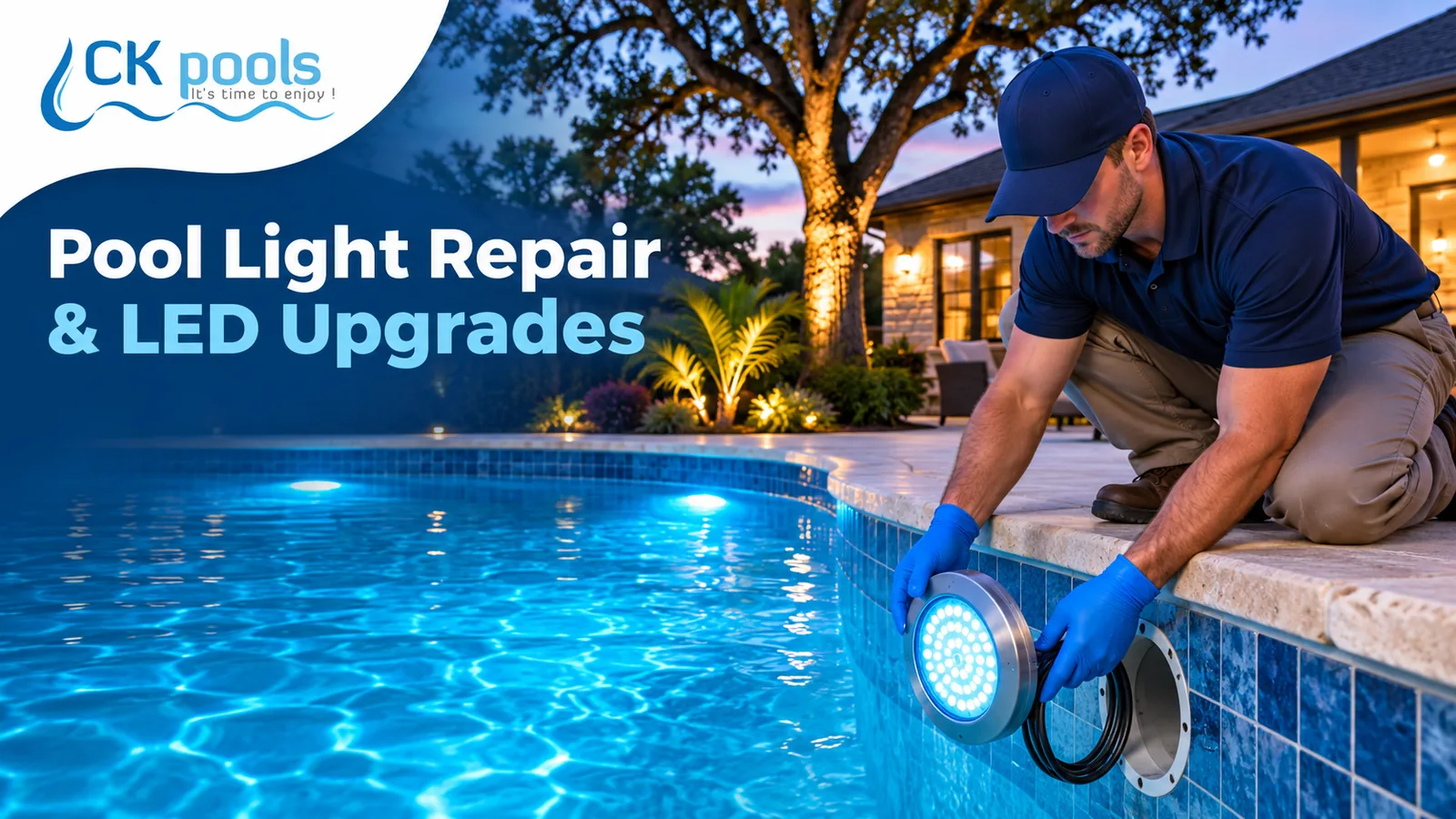
Your pool looks great at night, until the light stops working. Pool lights are one of the most common repair calls we get, and the cause is usually simple. The fix ranges from resetting a breaker to replacing an old fixture with a modern LED.
Key Takeaway: If your pool light stopped working, check the GFCI and breaker first. If power is fine, the bulb may be burned out, water may have leaked into the fixture, or the transformer may have failed. Old incandescent lights are usually best replaced with LED, which lasts much longer and uses far less electricity. Never open a pool light without turning off power.
This guide walks through why pool lights fail, what you can safely check yourself, when to repair vs. upgrade to LED, what the repair process looks like, and how to keep lights working.
Safety First
Pool lights combine water and electricity. Before you touch anything:
- Turn off the breaker that powers the light
- Never swim with a light that flickers, sparks or keeps tripping the GFCI
- Leave wiring and fixture repairs to a qualified professional
If anyone feels a tingle or shock in the water, get everyone out, turn off power at the breaker, and call for help right away.
How a Pool Light Works
Most in-ground pool lights sit in a niche, a metal or plastic housing built into the pool wall. The light fixture is sealed with a gasket and held in by a screw. Extra cord is coiled in the niche so the fixture can be pulled up to the deck for service without draining the pool. The cord runs through a conduit to a junction box and then to a switch, timer or automation system, often with a GFCI breaker or outlet for protection. Some lights run on standard line voltage. Others run on 12 volts through a transformer.
Common Reasons a Pool Light Stops Working
Tripped GFCI or breaker
The most common cause. Reset it. If it trips again, there is likely a fault, often water in the fixture. Stop and call a pro.
Burned-out bulb
Incandescent and halogen bulbs have short lifespans compared with LED.
Water inside the fixture
A worn or improperly seated gasket lets water in. You may see fog or water behind the lens.
Failed transformer
Low-voltage lights depend on a transformer. If it fails, the light goes dark.
Corroded wiring or connections
Moisture in the junction box or conduit corrodes connections over time. Coastal pools in Houston, Baytown and Corpus Christi see this more often.
Switch, timer or automation settings
Sometimes the light is fine but the schedule is wrong, or a timer lost its settings after a power outage.
Color-changing light out of sync
Some color LEDs need to be reset by cycling power in a specific pattern.
What You Can Check Yourself
- Check the GFCI outlet or breaker and reset it once.
- Check the switch, timer or automation app.
- Look at the light from the deck for fog, water or a dark bulb.
- Check whether other circuits at the equipment pad have power.
Stop there. Opening the fixture or the junction box is a job for a professional.
Signs of a Bigger Problem
- The GFCI trips again right after reset
- The lens is fogged or has water inside
- The light flickers or dims
- The pool is losing water and you have a light niche leak
- Rust or corrosion inside the junction box
A light niche or its conduit can also be a leak source. If your pool is losing water, see pool leak detection cost.
Repair or Replace With LED?
Repair makes sense when
- You already have an LED fixture in good condition
- The problem is a gasket, transformer or wiring connection
- The fixture is fairly new
Replace with LED when
- You have an old incandescent or halogen light
- Water has damaged the fixture
- Parts are no longer available
- You want color options or app control
Benefits of LED pool lights
- Much longer life
- Far lower power use
- Color and show options
- Cooler operation
- Many models fit existing niches without major changes
What a Pool Light Repair Involves
- Power off at the breaker and confirm it is dead.
- Remove the fixture screw and pull the fixture to the deck using the slack cord.
- Inspect the gasket, lens, bulb and cord.
- Replace the bulb, gasket or the full fixture as needed.
- Check connections at the junction box or transformer.
- Reseal the fixture with a new gasket and test it under water briefly before final install.
- Reinstall, restore power and test GFCI protection.
In most cases, no draining is needed.
When the Cord Is Too Short or Damaged
If the cord is damaged inside the conduit or too short to reach the deck, a new cord must be pulled through the conduit. This takes more time. In older pools, the conduit may be blocked, which can require more work.
Pool Light Upgrades Worth Considering
- Color-changing LEDs for parties and holidays
- Spa and step lights for safety
- Landscape and deck lighting to match
- Automation control so lights turn on and off on a schedule
See pool lighting options in Texas and smart pool automation.
How to Keep Pool Lights Working
- Replace gaskets whenever a fixture is opened
- Keep water chemistry balanced to protect the lens and niche
- Keep the junction box sealed and dry
- Test GFCI protection regularly
- Fix niche leaks quickly
Our weekly service technicians note light and equipment issues in every report, so you know when something needs attention.
Line-Voltage vs. Low-Voltage Pool Lights
Line-voltage lights
Run on standard household voltage (often 120V). Common in older pools. They need strict GFCI protection and proper bonding.
Low-voltage lights
Run on 12V through a transformer. Lower shock risk and common in newer pools and retrofits. If a low-voltage light fails, the transformer is a common culprit.
Knowing which type you have helps a technician diagnose faster. If you are not sure, check the label on the transformer or junction box, or ask during your next service visit.
Coastal and Humid Conditions
In Houston, Baytown and Corpus Christi, humidity and salt air speed up corrosion at junction boxes, transformers and fixture screws. Corroded connections cause flickering and GFCI trips. Sealing junction boxes and checking connections during regular service helps prevent surprise failures before a party or holiday.
Pool Light Repair Cost Factors
- Type of light (incandescent, halogen or LED)
- Bulb, gasket or full fixture replacement
- Transformer replacement
- Cord length and whether a new cord must be pulled
- Niche or conduit leaks that need sealing
- Automation or color-system programming
We give a clear quote after diagnosing the problem, and we never replace parts without your approval.
Before a Party: Quick Light Check
Turn the lights on a few days before guests arrive, not the same evening. Check every light, cycle color settings, and confirm the GFCI holds. That leaves time for a repair if needed.
Why Pool Lights Fail More Often in Older Pools
Older pools often have original line-voltage fixtures, worn gaskets, and cords that have been in the water for decades. Conduits may be corroded or partially blocked. Upgrading to a modern LED fixture during a repair visit often solves several aging problems at once.
Why Texas Homeowners Choose CK Pools
CK Pools is a family-owned Texas pool company with 37+ years of hands-on experience and more than 4,000 completed projects. Our crews work routes in Houston, Spring, Dallas-Fort Worth, Austin, San Antonio, Baytown and Corpus Christi, so we know how coastal humidity, hard water, heavy tree cover and clay soil each affect a pool.
- Green-Free Guarantee: if your pool turns green while under our weekly care, we fix it at no extra cost.
- Digital service reports: photos and chemical readings after every visit, so you always know what was done.
- No surprise charges: we never make a repair without your approval.
- Real people on the phone: call us directly at (281) 257-6657. No outsourced call center.
Ready to hand it off? Request a free pool service quote or compare our Full and Partial Pool Service Plans.
Frequently Asked Questions
Do I need to drain the pool to change a light?
No. Most fixtures have enough cord to be pulled up to the deck.
How long do LED pool lights last?
Many last 10+ years, much longer than incandescent bulbs.
Why does my pool light keep tripping the GFCI?
Usually water in the fixture or damaged wiring. Stop using it and call a professional.
Can I put an LED bulb in my old pool light?
Some fixtures accept LED replacement bulbs. In others, replacing the full fixture is the better fix.
Is it safe to swim if my pool light is broken?
If the light is off at the breaker and not damaged, swimming is generally fine. If it trips the GFCI or flickers, keep power off until it is repaired.
How do I know if my pool light is low voltage?
Look for a transformer near the equipment or check the fixture label. A technician can confirm during a service visit.
Sources
About the Author
Written by the CK Pools Service Team
CK Pools is a family-owned Texas pool company with 37+ years of hands-on experience and more than 4,000 completed projects across Houston, Spring, Dallas-Fort Worth, Austin, San Antonio, Baytown and Corpus Christi. Our technicians test, clean and repair pools every week, and every article is reviewed by our field team. Questions? Call (281) 257-6657.

Most pool light failures come from a burned-out bulb, tripped GFCI, water in the fixture or a bad transformer. LED upgrades last longer and use less power.


