


Saltwater Pool Conversion Cost in Texas: Is It Worth It?
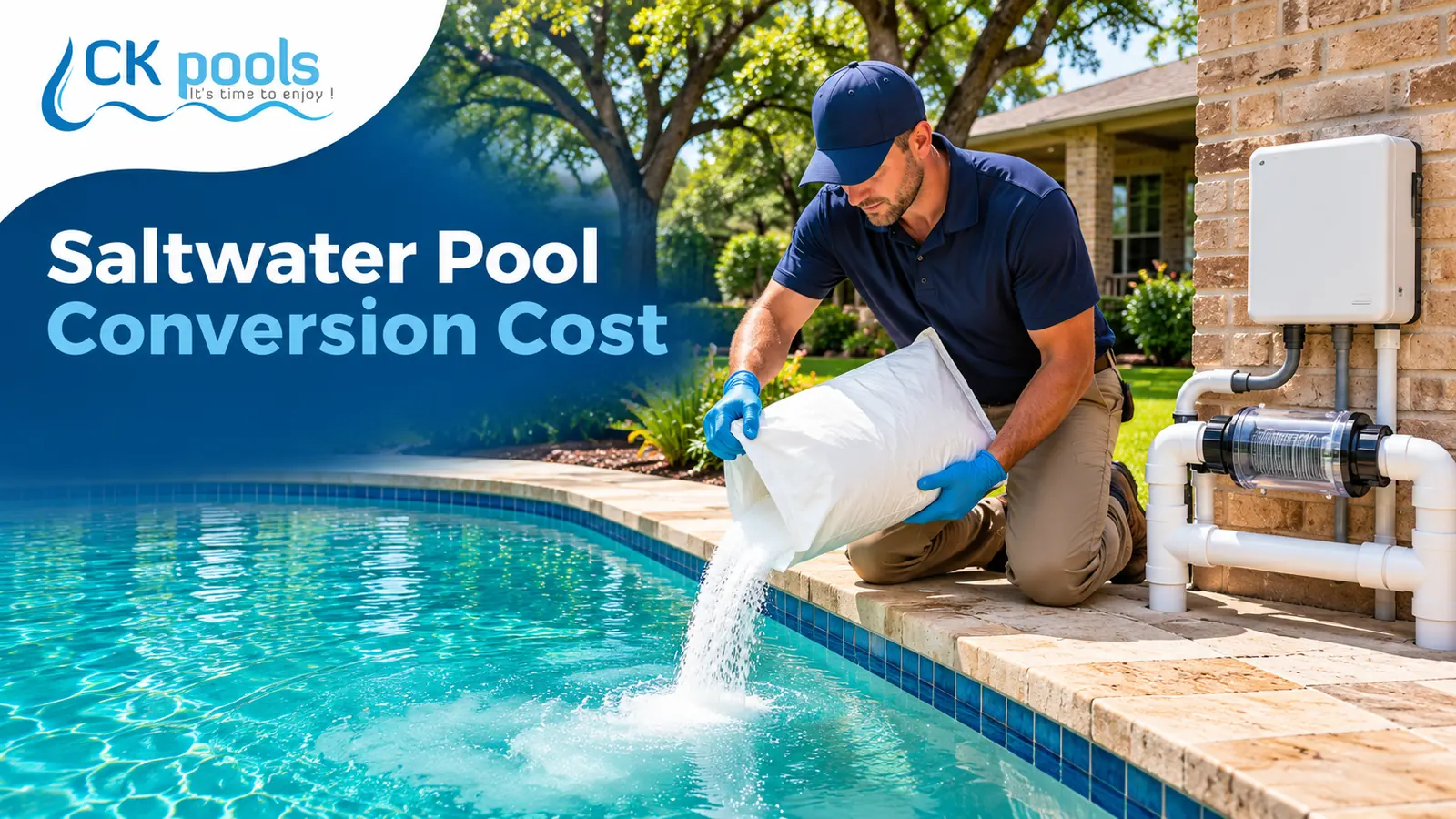
Tired of hauling jugs of chlorine and adding tablets every week? Many Texas pool owners look at saltwater systems for steadier chlorine and softer-feeling water. Before you switch, it helps to know what a conversion includes, what drives the cost, and whether it pays off for your pool.
Key Takeaway: Converting a chlorine pool to saltwater means installing a salt chlorine generator, adding pool salt, and adjusting water chemistry. You pay more upfront for the equipment, then spend less on chlorine over time. In Texas, plan for regular salt cell cleaning because of hard water, and for cell replacement every few years.
This guide covers how saltwater systems work, what a conversion includes, cost factors, the real pros and cons in Texas conditions, and how to decide if it is right for you.
How a Saltwater Pool Works
A saltwater pool is not chlorine-free. It is a chlorine pool that makes its own chlorine. You add pool-grade salt to the water, usually to around 3,000–4,000 ppm, depending on your system. That is much less salty than the ocean, roughly the level of a mild saline solution.
As water flows through the salt cell, a low electric current turns salt into chlorine. The chlorine sanitizes the pool, then breaks back down into salt. The salt is reused over and over. You only add more when water is lost through splash-out, backwashing, leaks or heavy rain overflow.
What a Saltwater Conversion Includes
- Salt chlorine generator: a control box and a salt cell sized for your pool
- Plumbing: the cell is installed in the return line after the filter and heater
- Electrical: the control box needs a proper power connection, often through the pump timer or automation
- Flow sensor: stops the cell from running without water flow
- Initial salt: often several hundred pounds for a typical residential pool
- Water balancing: adjusting pH, alkalinity, CYA and calcium for a salt system
- Startup and programming: setting output and pump run times
You do not need to drain your pool to convert. Salt is added to your existing water.
What Affects Conversion Cost?
Pool size
Larger pools need larger cells and more salt.
System brand and features
Some systems include built-in automation, phone control or self-cleaning features.
Existing equipment
If your pump runs too few hours or your plumbing lacks space, you may need changes.
Electrical work
Some homes need new wiring or a breaker.
Water condition
If your water has very high CYA or calcium, partial draining before conversion may be wise.
Add-ons
Many owners add automation or a variable-speed pump at the same time.
Every pool is different, so a written quote after seeing your equipment is the best way to know your total.
Pros of Saltwater Pools in Texas
Steady chlorine
A salt cell makes chlorine every hour the pump runs, so levels stay more even than with weekly manual dosing.
Softer-feeling water
Many swimmers say saltwater feels gentler on skin and eyes. Fewer chloramines often mean less "pool smell."
Fewer chemical purchases
You buy far less chlorine. Salt is inexpensive and lasts a long time in the water.
Convenience
No storing jugs of chlorine in a hot Texas garage.
Cons and Costs to Plan For
Higher upfront cost
The generator and installation cost more than a season of chlorine.
Salt cell cleaning
Texas hard water scales salt cells. In Austin and San Antonio especially, plan to inspect monthly and clean every few months. See how to clean a salt cell.
Cell replacement
Cells usually last about 3 to 7 years. Replacement is a real ongoing cost.
pH tends to rise
Salt pools often need regular acid to keep pH down.
Salt and surfaces
Salt can affect some natural stone coping, decks and older metal parts. Sealing stone and choosing salt-friendly equipment helps.
Peak-summer limits
In the hottest weeks, the cell may not keep up with heat, sun and swimmer load. Running longer, using the boost setting, or adding a shock after storms helps.
Saltwater vs. Chlorine: Which Is Cheaper Over Time?
It depends on how you use your pool and who maintains it.
- If you maintain the pool yourself and buy chlorine at retail, salt often saves money over a few years, even after cell replacements.
- If you use a weekly service that includes chemicals, the savings are smaller, since the service already handles chlorine.
- If your water is very hard, cell cleaning and replacement costs rise.
Read our full comparison: saltwater vs. chlorine pools in Texas.
Is Your Pool a Good Fit for Salt?
Good fit
- Plaster, quartz, pebble or fiberglass pools
- Owners who want steady chlorine with less hands-on work
- Pools with modern, salt-compatible equipment
Think carefully if
- You have natural stone coping or decking that is not sealed
- Your heater or other equipment is older and not rated for salt
- Your calcium hardness is already very high
- You rarely run your pump long enough to make enough chlorine
Water Chemistry for Salt Pools
- Salt: follow your system's range, often 3,000–4,000 ppm
- Free chlorine: about 1–4 ppm (the CDC recommends at least 1 ppm free chlorine, or at least 2 ppm if you use stabilizer, with pH 7.0–7.8)
- pH: 7.2–7.6, and expect to add acid regularly
- Total alkalinity: often a little lower than in chlorine pools, around 60–90 ppm, to slow pH rise
- CYA (stabilizer): often 60–80 ppm for salt pools in Texas sun
- Calcium hardness: keep in range to limit scale
How Long Does a Conversion Take?
Most installations take a few hours to a day. Salt needs time to dissolve and circulate, so the system is usually fully running within a day or two.
Converting Back to Chlorine
If you ever want to go back, you can stop the salt system and use regular chlorine. The salt will slowly dilute as you add fresh water over time.
Choosing the Right Salt System
Size up, not down
Salt cells are rated by pool volume. Choosing a cell rated for a larger pool than yours lets it run at lower output, which often extends its life. In Texas summers, the extra capacity also helps the cell keep up with heat and swimmer load.
Look for helpful features
- Self-cleaning (reverse polarity) to slow scale
- Clear salt and cell status readouts
- Integration with automation or phone control
- A warranty that covers the cell for a reasonable term
Match your equipment
Make sure your heater, pump and other equipment are rated for salt use. Some older heaters and metal parts are not.
Saltwater Conversion by Region
- Houston, Spring and Baytown: heavy rain can dilute salt, so test salt after big storms and top up as needed.
- Corpus Christi: coastal air already challenges metal parts. Choose salt-rated equipment and keep the equipment pad clean and dry.
- Austin and San Antonio: the hardest water we service. Expect more frequent cell cleaning and close pH control.
- Dallas-Fort Worth: salt cells stop making chlorine in very cold water. In winter, you may need to supplement with liquid chlorine.
A First-Year Plan for New Salt Pool Owners
- Test salt weekly for the first month, then monthly.
- Check pH twice a week. Expect to add acid.
- Inspect the cell monthly.
- Adjust output with the seasons.
- Shock after storms and pool parties.
- Keep a simple log, or let your service company track it in visit reports.
Common Myths About Saltwater Pools
- Myth: saltwater pools need no maintenance. They still need pH control, cell cleaning and regular testing.
- Myth: the water tastes like the ocean. Salt levels are far lower, and many people barely notice it.
- Myth: salt pools never get algae. If output is too low or the pump runs too little, algae can still grow.
Why Texas Homeowners Choose CK Pools
CK Pools is a family-owned Texas pool company with 37+ years of hands-on experience and more than 4,000 completed projects. Our crews work routes in Houston, Spring, Dallas-Fort Worth, Austin, San Antonio, Baytown and Corpus Christi, so we know how coastal humidity, hard water, heavy tree cover and clay soil each affect a pool.
- Green-Free Guarantee: if your pool turns green while under our weekly care, we fix it at no extra cost.
- Digital service reports: photos and chemical readings after every visit, so you always know what was done.
- No surprise charges: we never make a repair without your approval.
- Real people on the phone: call us directly at (281) 257-6657. No outsourced call center.
Ready to hand it off? Request a free pool service quote or compare our Full and Partial Pool Service Plans.
Frequently Asked Questions
Is a saltwater pool chlorine-free?
No. The salt system makes chlorine from salt automatically.
Do I need to drain my pool to convert to salt?
No. Salt is added to your existing water.
How long does a salt cell last?
Often 3 to 7 years depending on use and water chemistry.
Will salt damage my pool?
Salt is generally safe for most pool finishes. Natural stone and older metal equipment need extra care.
Do saltwater pools still need chemicals?
Yes. You still adjust pH, alkalinity, stabilizer and calcium, and shock occasionally.
Can I convert an older pool to salt?
Usually yes, as long as the equipment and coping can handle salt. A technician should check heater and metal parts first.
Sources
About the Author
Written by the CK Pools Service Team
CK Pools is a family-owned Texas pool company with 37+ years of hands-on experience and more than 4,000 completed projects across Houston, Spring, Dallas-Fort Worth, Austin, San Antonio, Baytown and Corpus Christi. Our technicians test, clean and repair pools every week, and every article is reviewed by our field team. Questions? Call (281) 257-6657.

Converting to saltwater means adding a salt chlorine generator and salt. Upfront cost is higher, but many owners save on chlorine and enjoy softer-feeling water.


